| Issue 22 · October 21, 2026 |
| Forwarded this? Subscribe to Vianarra, free
|
|
This Week
What Brings You In Today?
A tasting room and an inn in wine country, and the regulars each of them nearly missed
This issue has two stories about guests who keep coming back without showing up on anyone’s list. One is a woman who has bought a Dry Creek Valley winery’s Zinfandel since 2020 without joining the club. The other is a couple checking in at a Calistoga inn for their eleventh October, with a clerk in his third week behind the desk. The second story runs in full here and nowhere else.
|
|
|
Stories · Tasting Room
Have You Been Here Before?
Two longtime customers at a Dry Creek Valley counter, and the library pour only one of them got
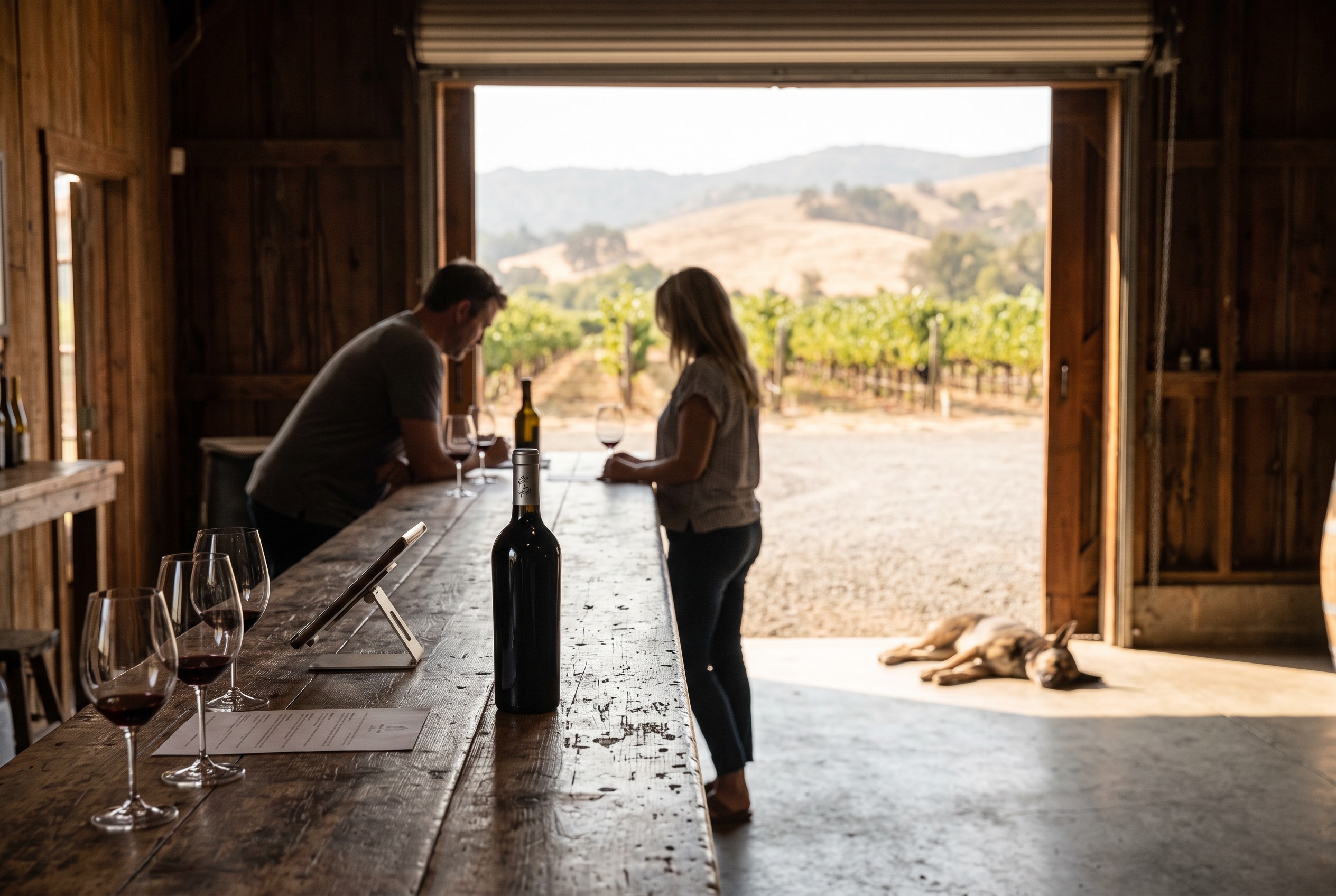
The tasting room sat at the end of a gravel drive in Dry Creek Valley outside Healdsburg, an old barn with the big doors rolled open and a dog asleep on the concrete in the only patch of shade. On a Saturday in late summer two longtime customers stood at the counter about four feet apart, and I was at the far end with a flight I had paid for, close enough to hear both conversations and far enough away that nobody minded.
The man on the left was greeted by his first name before he had set his keys down. The tasting room host asked about his daughter’s wedding in Petaluma and whether the Zinfandel they had poured at the reception held up in the heat, and then she reached under the counter for a bottle that wasn’t on the menu, an unlabeled 2016 old-vine Zinfandel from the library with the vintage written on the capsule in silver marker, and poured him a taste without being asked.
The woman on the right had driven over from Sacramento that morning. The host smiled, handed her the tasting menu, and asked, “Have you been here before?” The woman said she had, once or twice a year since 2020, and that she usually went home with a few bottles of the Zinfandel. “Oh, welcome back,” the host said, and she meant it, and then she poured the standard flight off the printed card.
Read the full story
|
|
|
Stories · Front Desk
Eleven Octobers
A clerk in his third week and the night manager who knew their names
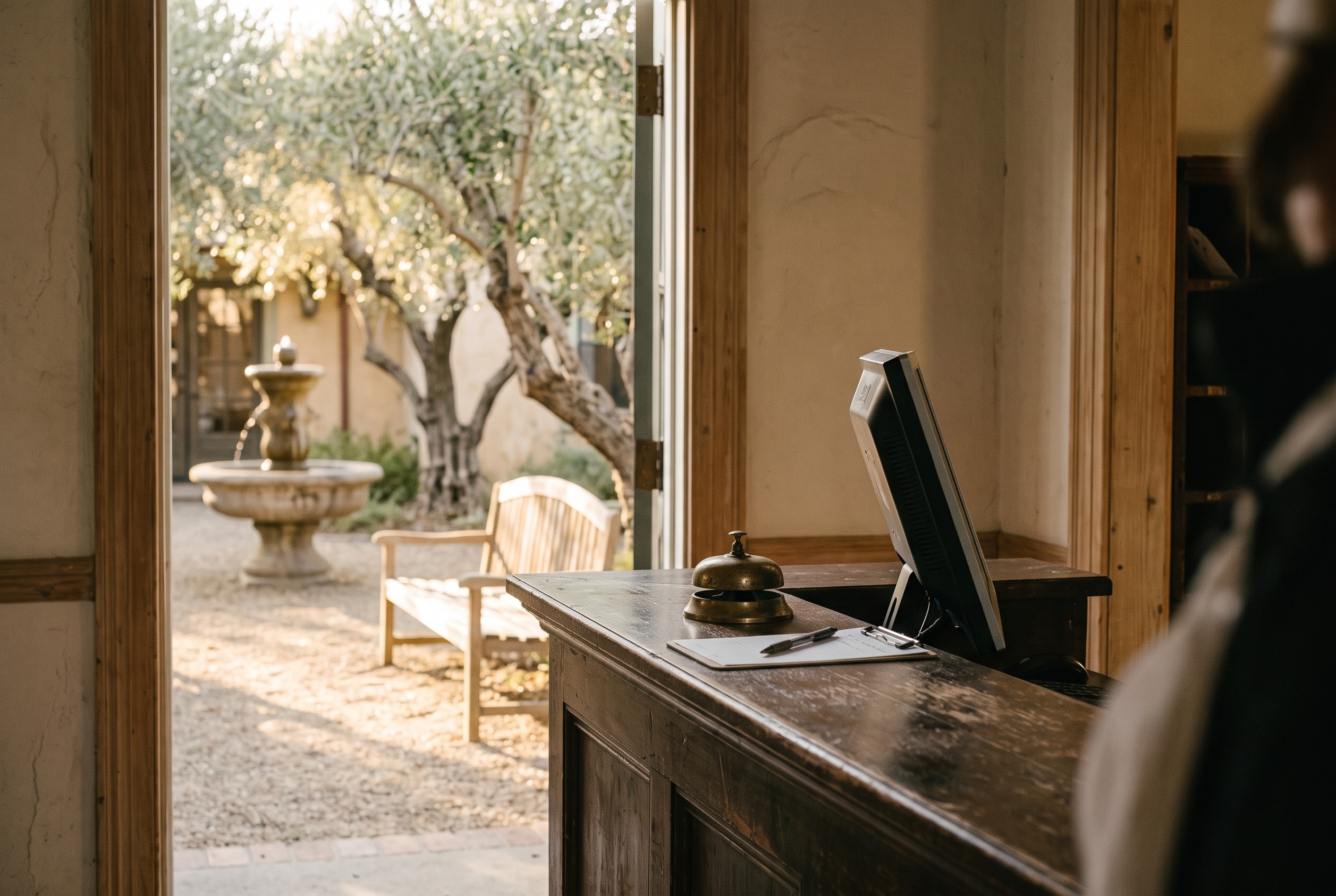
On a Thursday afternoon in October I was second in line at the front desk of a small inn on the north end of Calistoga, holding my bag and a printout I didn’t need, behind a couple in their sixties who had plainly done this before. The man set his keys on the counter, and the woman was already looking past the desk toward the courtyard, where a row of old olive trees threw shade across the pool, the way someone checks that a place is still the way she left it.
The young man behind the desk was in his third week. I knew that because he told them so, cheerfully, when the computer took longer than he expected, and he apologized twice for the wait. He found the reservation, which had come in through an independent travel advisor they had used for years, under the agency’s name and contact details, and asked whether they had stayed with the inn before.
The woman laughed. “Eleven years,” she said. “Every October. We had the room by the fountain until they redid the bathrooms.”
He looked back at the screen, and as far as the screen was concerned she was a new guest. The booking had arrived with the agency’s name and email on it, nothing like the contact details the couple used at home, and the property management system had done what it was built to do with details it didn’t recognize, which is open a new profile. Their eleven years were in there somewhere, split between a profile from the years they booked by phone and another from the year the inn changed software, and none of it was connected to the woman standing at the counter. He handed her the registration card, explained the parking, and pointed toward the courtyard as though they might have trouble finding it.
The clerk didn’t do anything wrong. He was polite and quick, and he had been taught what most new front desk staff are taught in their first week, which is to verify the booking, take the card, and go over the amenities. Nobody had shown him how to search for a guest by last name across old profiles, and nobody had told him that a couple on their eleventh October could arrive looking exactly like any other agency booking.
The night manager came out of the back office while the woman was signing the card. She had been at the inn for as long as the couple had been coming, and she said the woman’s first name before she reached the desk. She asked about their son, who had been married in the garden a few years back, and told them she had put them by the fountain again because the new bathroom in that room was finally done. Then she leaned over the clerk’s shoulder, typed for a few seconds, and the three profiles became one, with a note at the top that said October, room by the fountain, son married here. Then she asked what they were in the mood for that night. The man said anything but Italian again, and she told them about a place that had opened on Lincoln Avenue in the spring, eight tables and a short list of local wines, which hadn’t been there the last time they came. She picked up the phone and got them the seven-thirty.
When it was my turn, she stayed at the desk while he checked me in. I could hear her showing him, quietly, how to search by last name, what an advisor’s booking looks like on the screen, and why it was worth asking a returning guest what brought them back to town instead of whether they had been there before. He wrote it down on the back of a registration card and slid it under the keyboard.
A lot of the guests who keep boutique hotels and inns going arrive through travel sites and independent advisors, and the desk only knows them if someone connects the booking to the person standing there. The advisor who sends this couple every October will hear how the stay went, and the place on Lincoln Avenue now has two more guests who might come back. The person who knew them that afternoon had been at the inn eleven years. The clerk in his third week was going to need someone to show him, and that afternoon someone did.
On my way across the courtyard I passed them on the bench by the fountain. She had her shoes off and her feet in the sun, and he was paging through the inn’s guest book from the front, looking for the page they had written on the first year.
The inn and the guests are not named.
|
|
|
The Numbers
56%
Share of all winery sales that came through the tasting room and wine club last year, across 450 wineries in Silicon Valley Bank’s 2026 Direct-to-Consumer Wine Report. The median winery showed no growth.
30%
Diners who say they always get recognized at the places they visit most, though 48 percent say being remembered is what makes them feel most valued, according to The Regulars Report 2026 from Toast and Resy.
75%
Travelers in a Mews survey of 3,250 who say good hospitality depends on human staff, whatever technology runs behind it.
Why the regulars outside the club matter more this year
|
|
|
Worth Reading
Sonoma County Wineries Building a Brighter Future
Sonoma Magazine, October 16
More Sonoma County wineries are dropping reservations-only rules in favor of walk-ins, social hours, and later closing times, which is the shift last week’s issue argued for. Visits are still falling, but the piece cites Wine Business Monthly’s survey showing an 8 percent drop last year, down from 14 percent the year before.
Livermore Valley Named 2026 American Wine Region of the Year
Wine Industry Advisor, October 15
Wine Enthusiast gave its American Wine Region of the Year award to Livermore Valley, one of the oldest wine regions in California, and the announcement names authentic hospitality alongside the quality of the wine. Livermore sits about 35 miles east of San Francisco and usually gets passed over for Napa and Sonoma, and this gives visitors a reason to make the drive.
Hotel Distribution in 2026: Google Still Sends the Guest
Hospitality Net, October 19
Google’s AI Mode now books hotel rooms through ten chains and travel sites, none of them independent, and independent hotels without a price feed lost the price on their Google listing after September 30. For a small inn, the guest who books direct is getting harder to win, which makes that guest worth knowing by name at the desk.
|
|
|
Insights · How-To
Recognize the Regulars Outside the Club
How to find the loyal buyers who never joined and put them on the host’s screen
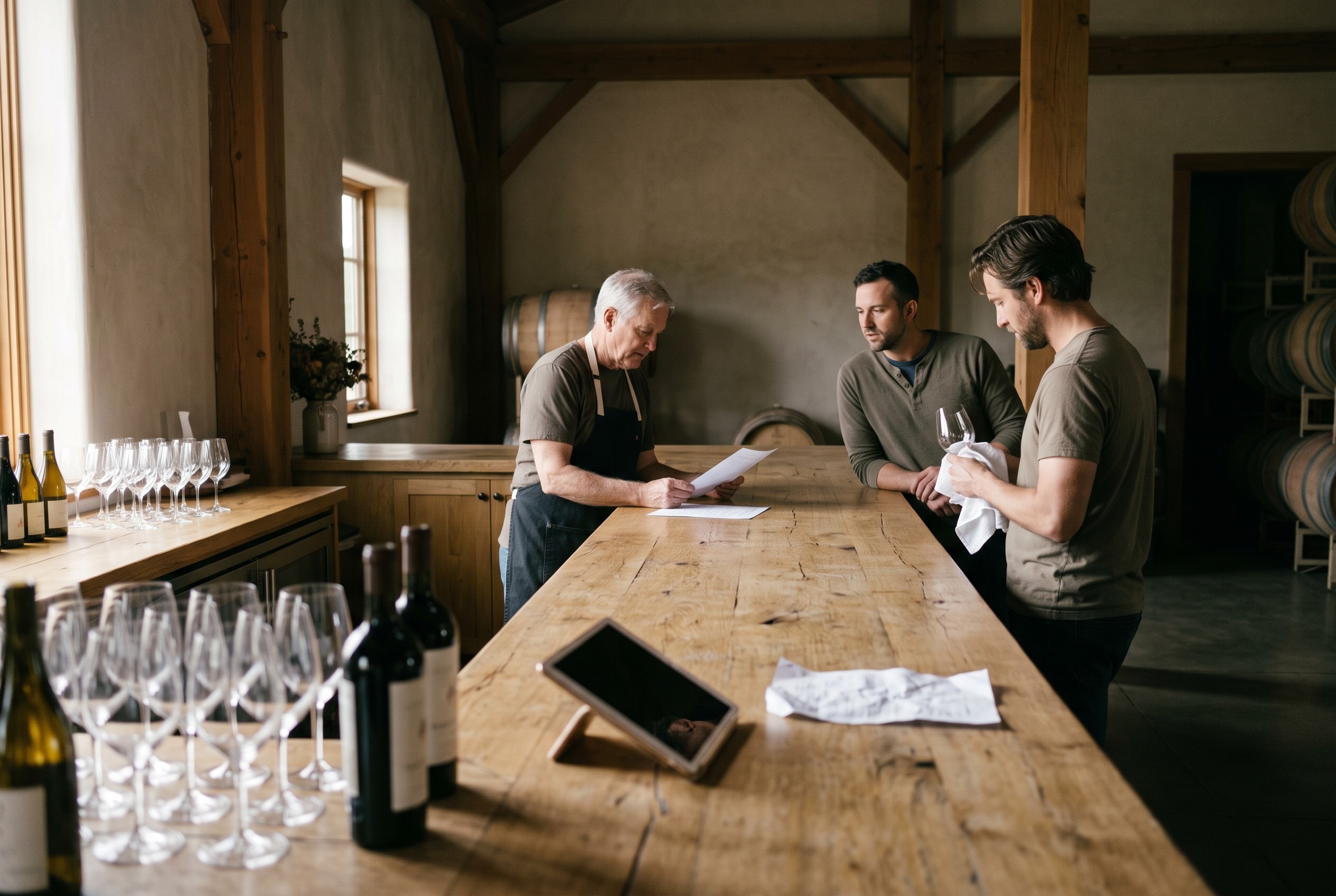
Most tasting rooms have a list nobody looks at: guests who have bought the wine for years without joining the club, and former members who cancelled their shipments and kept coming back anyway. The point-of-sale system knows who they are. The host on shift usually doesn’t.
The new Insights post covers how to pull that list, how to flag those guests on the host’s screen, the daily pre-shift meeting Brooks Wine in Oregon pays its hosts to come in early for, and a better first question than “Have you been here before?” The same steps work at an inn’s front desk.
Read on Insights
|
|
|
Meet the Winemakers
Ivo Jeramaz, Grgich Hills Estate
Ivo Jeramaz grew up in a Croatian family of grape growers, earned an engineering degree at the University of Zagreb, and came to Napa Valley in 1986 with the help of his uncle, Mike Grgich. He is now the winemaker and vice president of vineyards and production at Grgich Hills Estate. The full transcript of our conversation is on the site.
Read the interview
Meet the Winemakers is an oral history series with winemakers around the world. Winemakers who want to take part, or readers who know one who should, can reply to this email or book an hour.
|
|
Staff Workshops
Knowing a regular when she walks in is something a team can practice, at a tasting room counter or a front desk. My Staff Workshops start with a visit, then a three-hour session with the whole team, including the people who don’t usually face guests. If you pull the list of regulars outside your club and want a second set of eyes on what it shows, book thirty minutes with me.
Book thirty minutes
How the workshops run
|
|
|
Your turn
What’s the first thing your hosts or front desk say when a guest walks in? Hit reply and tell me. With your permission, a few answers will run in a future issue.
|
|
|
Sponsor Vianarra
Vianarra and Pour Story Society reach about 1,200 readers across the food, wine, and travel trade and the guests they serve. Each issue carries a single sponsor, a winery, hotel, or company that works with them, presented the same way the stories are.
Ask about sponsoring an issue
|
|
|
New here?
Vianarra is a free weekly newsletter on hospitality storytelling for the food, wine, and travel trade, written for the people who greet guests at the door.
Know a tasting room manager or innkeeper whose regulars deserve a better first question? Forward this issue.
Subscribe to Vianarra
|
|
|
Patrick R. Dunn writes Vianarra and works with wineries, hotels, and restaurants on how their teams tell their story to guests. He spent thirty years leading global crisis management and operational resilience teams across four continents through 9/11, Katrina, and Sandy, and more than a decade as a National Park Service interpretive ranger at six sites. He trained in narrative at the University of Maine under Stephen King and folklorist Sandy Ives, holds WSET Level 3, and is the author of Stop Leading on Empty.
vianarra.com ·
patrick@vianarra.com
|
|
|